Launch offer — valid today only

📄 Digital book in PDF · read it on your phone or print it

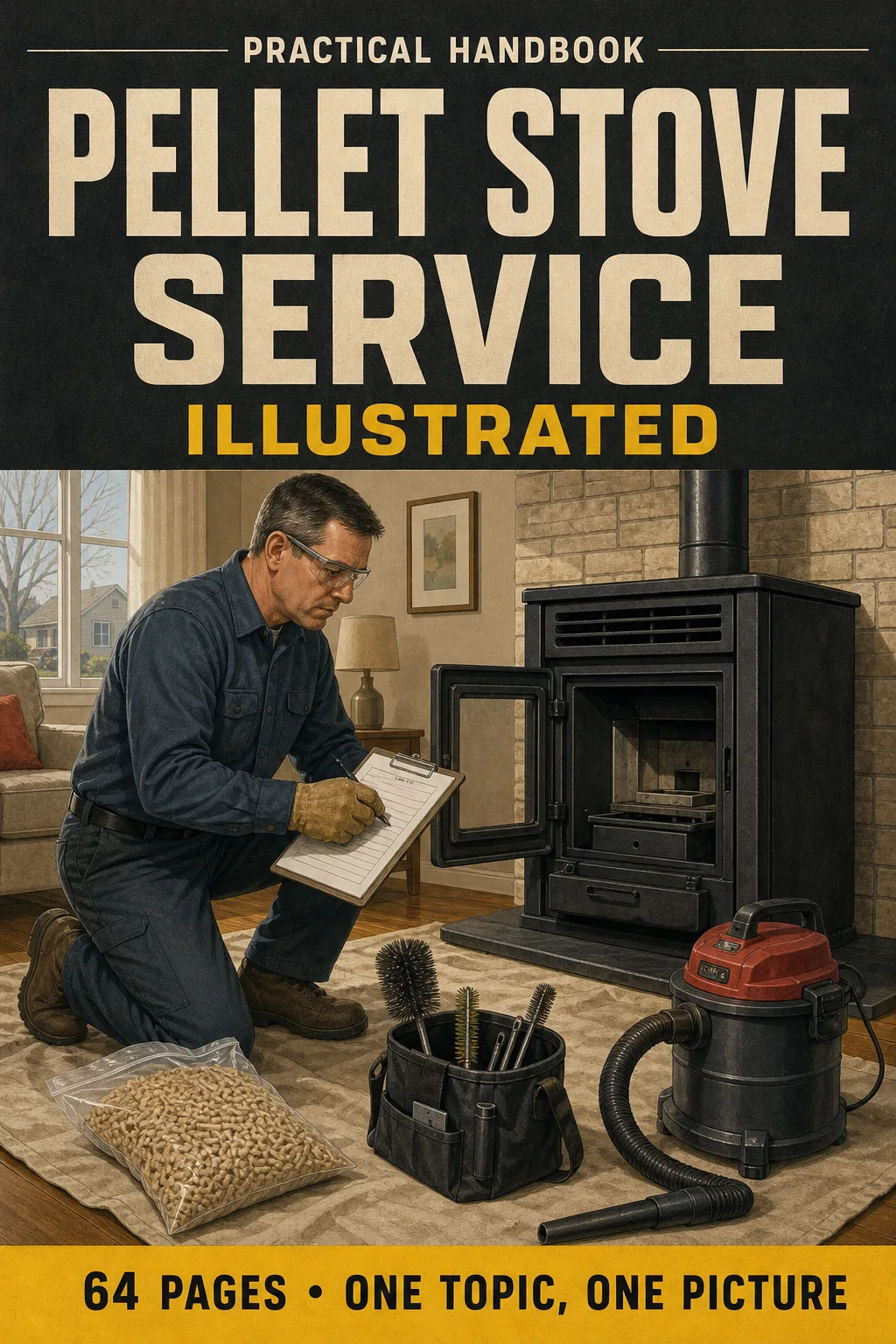
Pellet Stove Service, Illustrated: One 6-Step Troubleshooting Order for Every Brand and the Pellet Specialist Exam One Topic on Every Page

Pellet grades, auger feed, blowers, igniters, the vacuum switch, PL vent, clearances, annual cleaning and troubleshooting by symptom. Every topic gets its own page: the drawing first, then what you need to remember. 64 illustrated pages.

GET THE ILLUSTRATED BOOK

🔒 Secure checkout · PDF by email · 30-day guarantee

Every topic, its own pageEach part of the stove drawn, with the explanation right beside it
64 illustrated pages9 parts, from the stove as a system to exam review
Up-to-date sourcesNFPA 211, the IRC and the manufacturer's listed instructions
PDF by emailFormat

Look Inside the Book

Every page has one big drawing and a box with the numbers and steps you need to know:

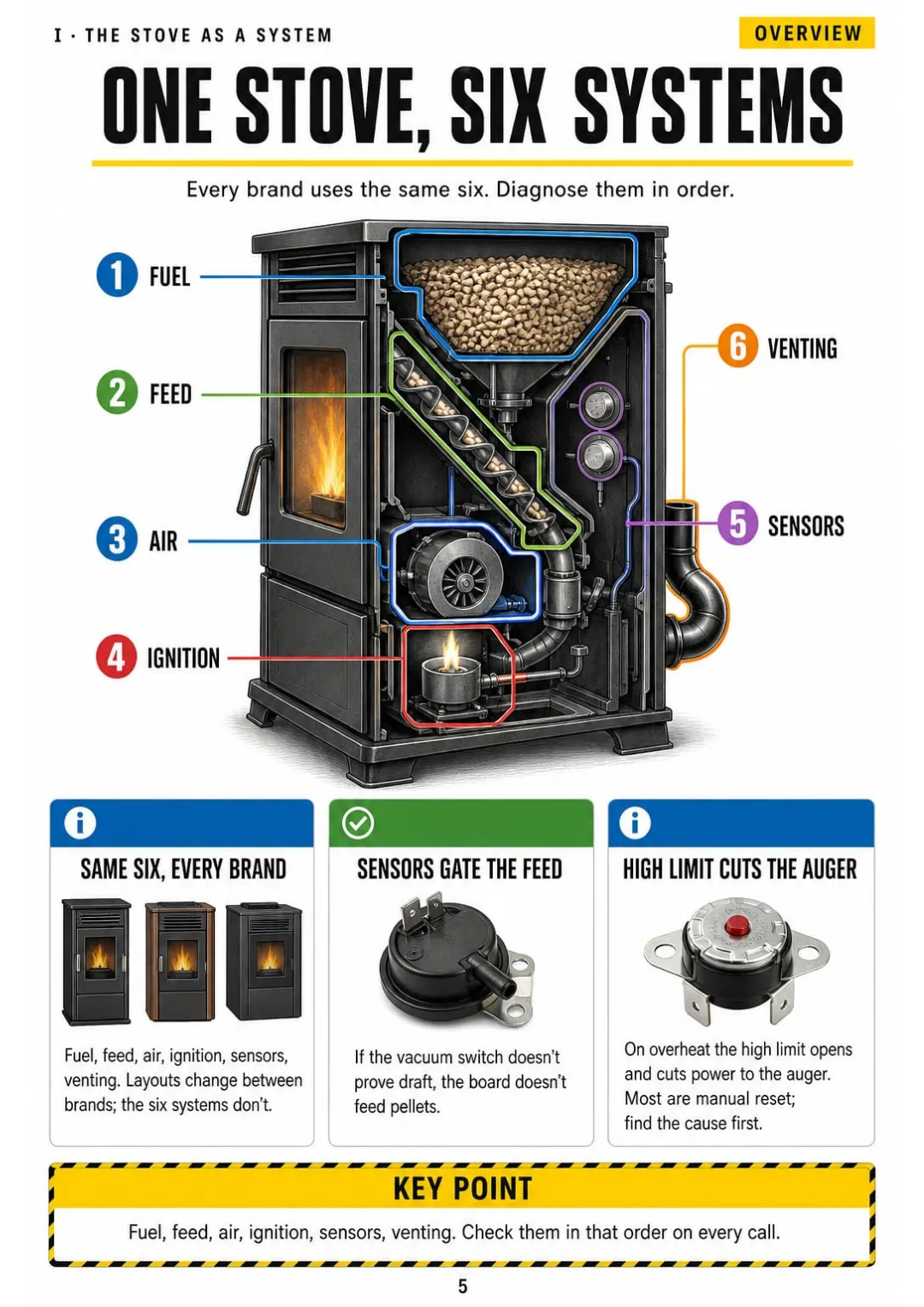
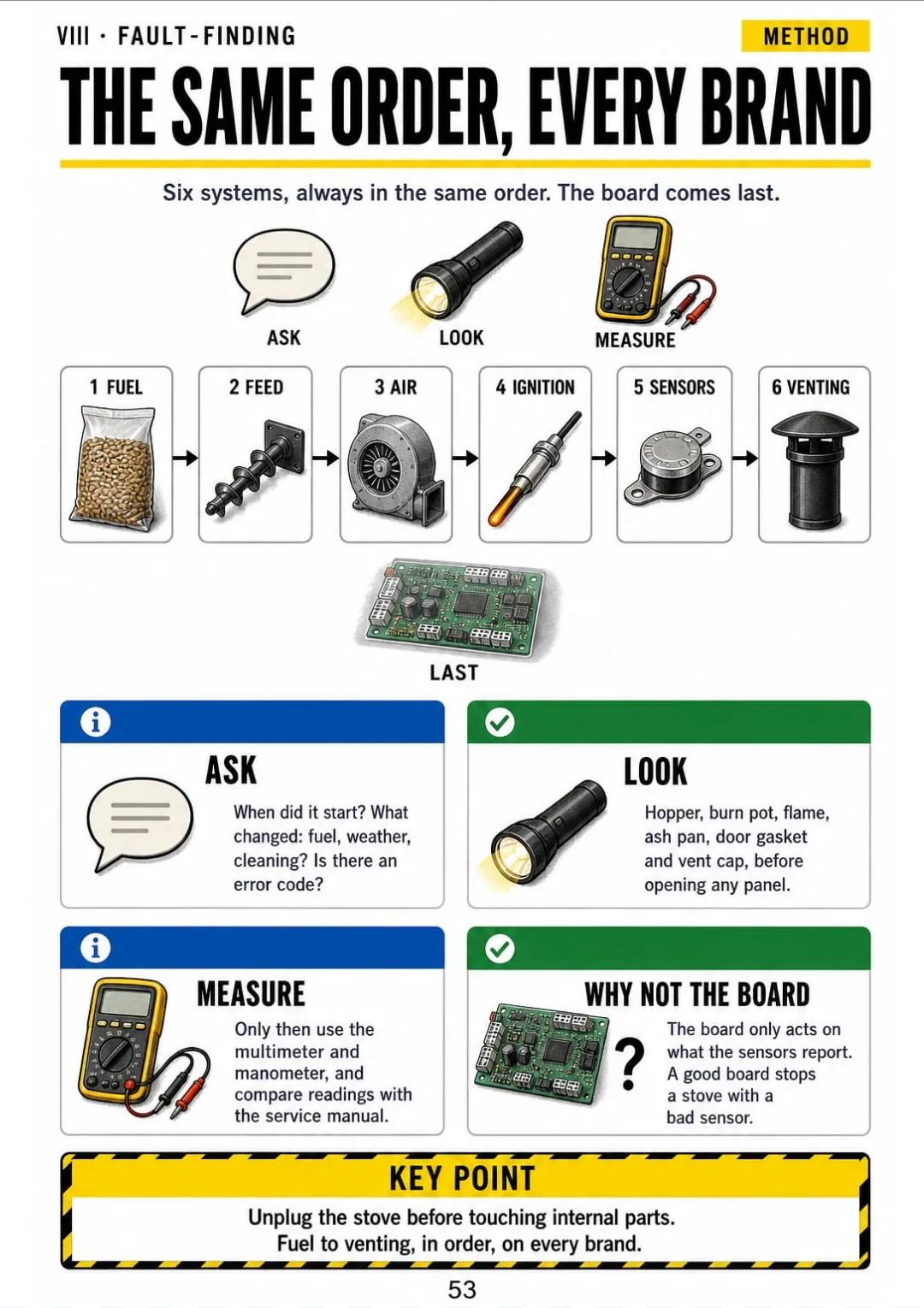
Six systems, numbered 1 to 6: the order you diagnose in on every brand
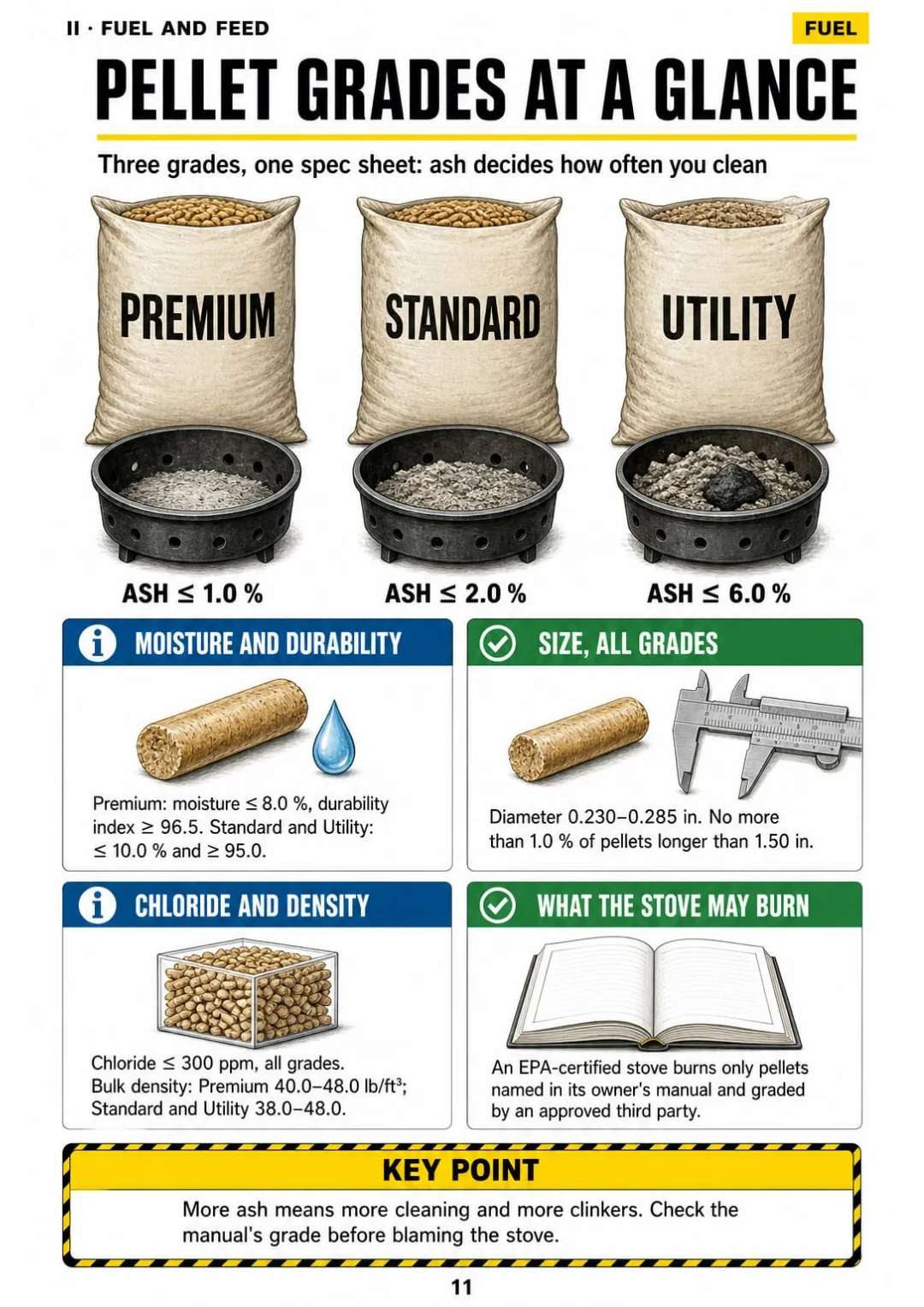
Ash by grade: Premium ≤ 1.0 %, Standard ≤ 2.0 %, Utility ≤ 6.0 %.
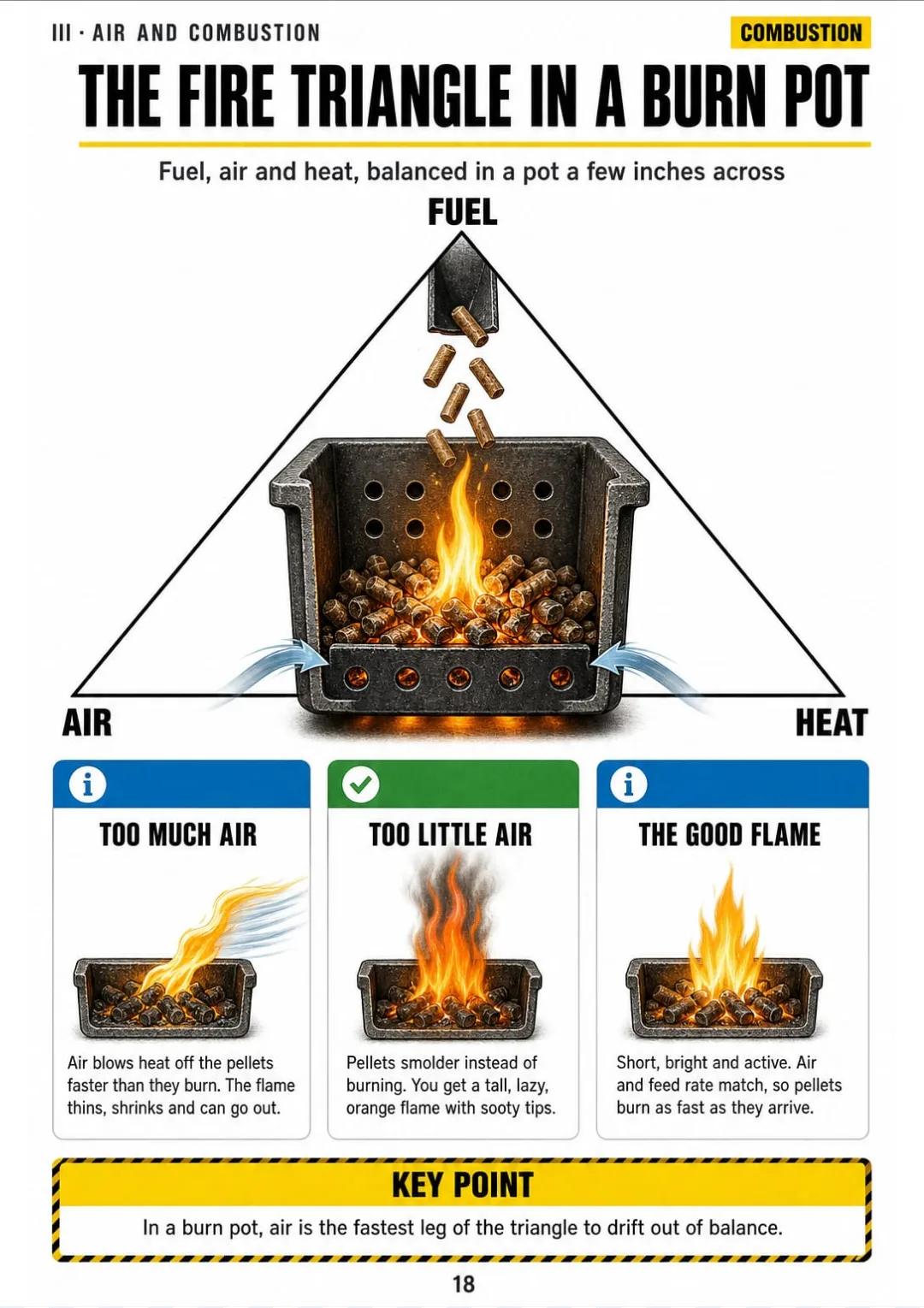
Too much air blows it out, too little makes it lazy and sooty: the good flame is short and bright.
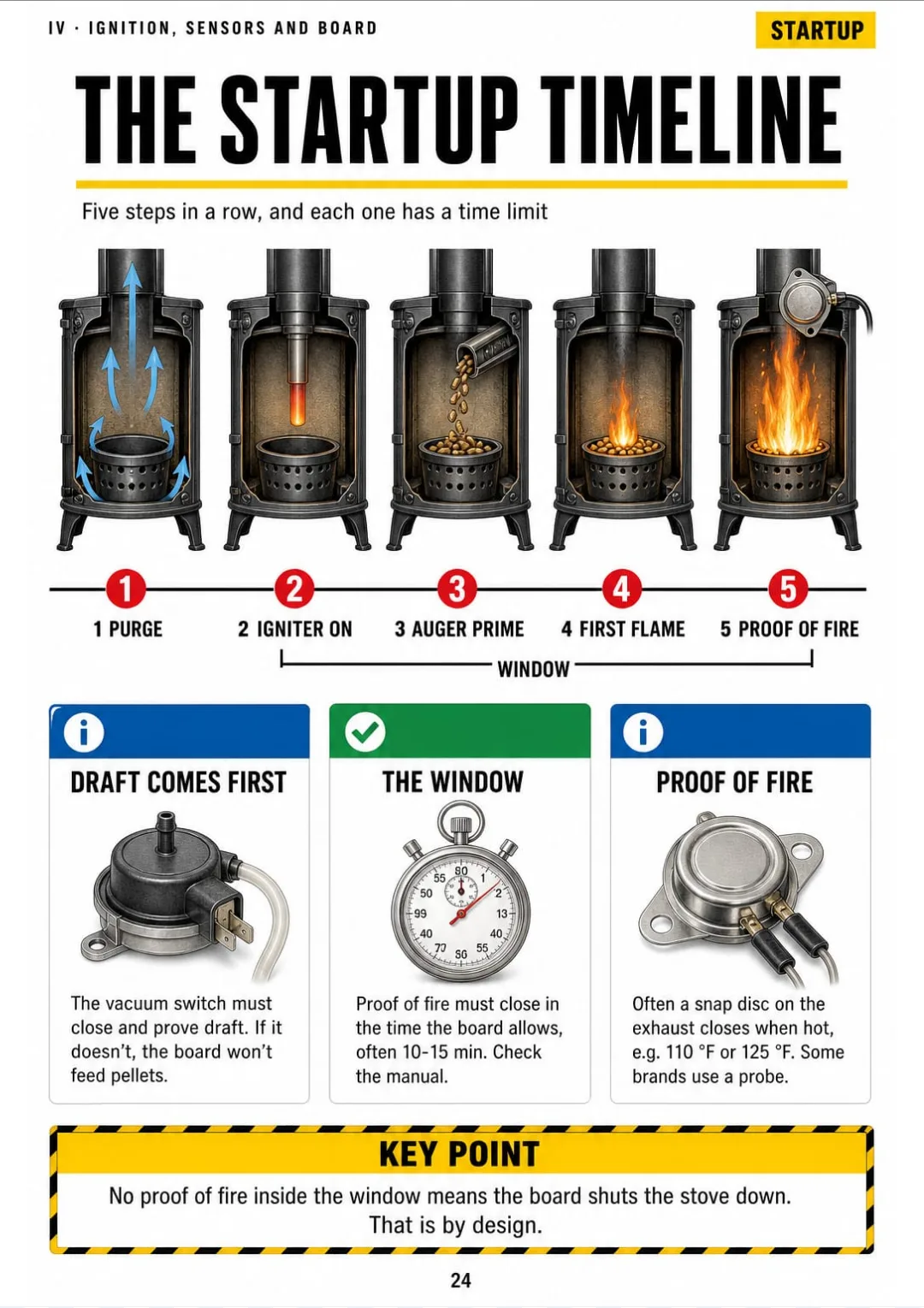
Purge, igniter, auger prime, flame, proof of fire: no proof in the window (often 10-15 min) means shutdown.
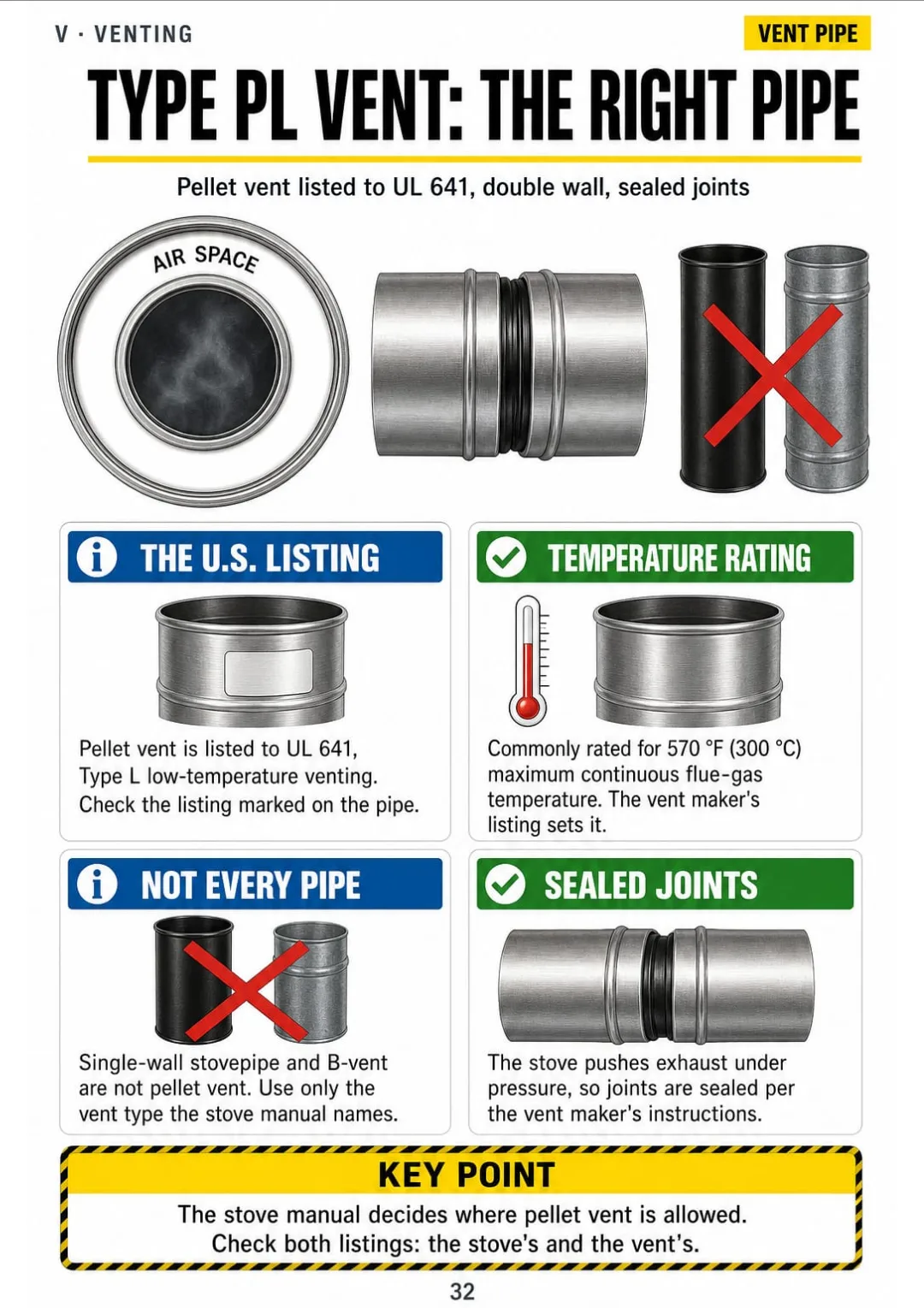
Pellet vent: UL 641 listing, 570 °F rating, sealed double-wall joints.
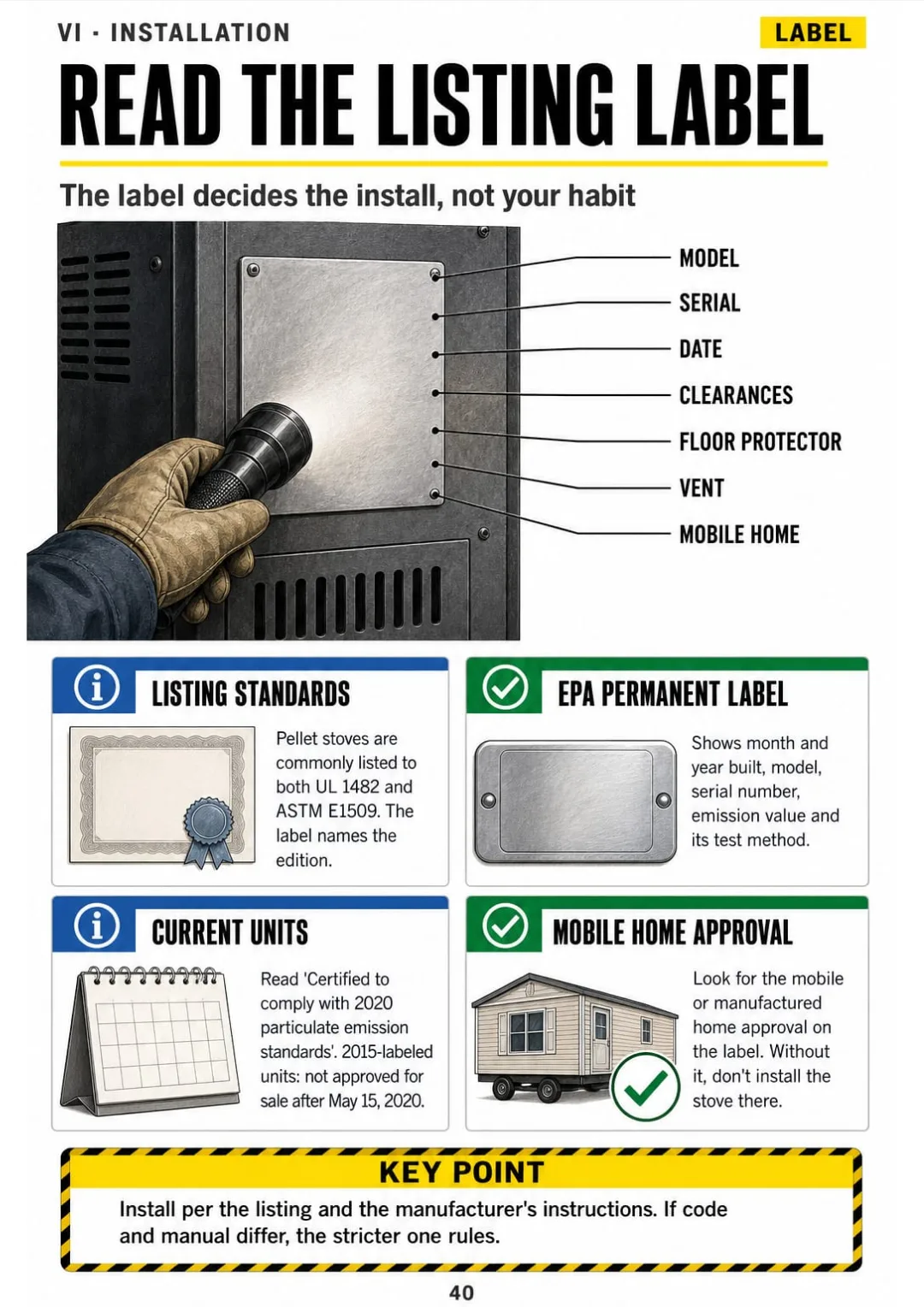
Listing label: ASTM E1509 / UL 1482, model, serial, date and clearances in one place
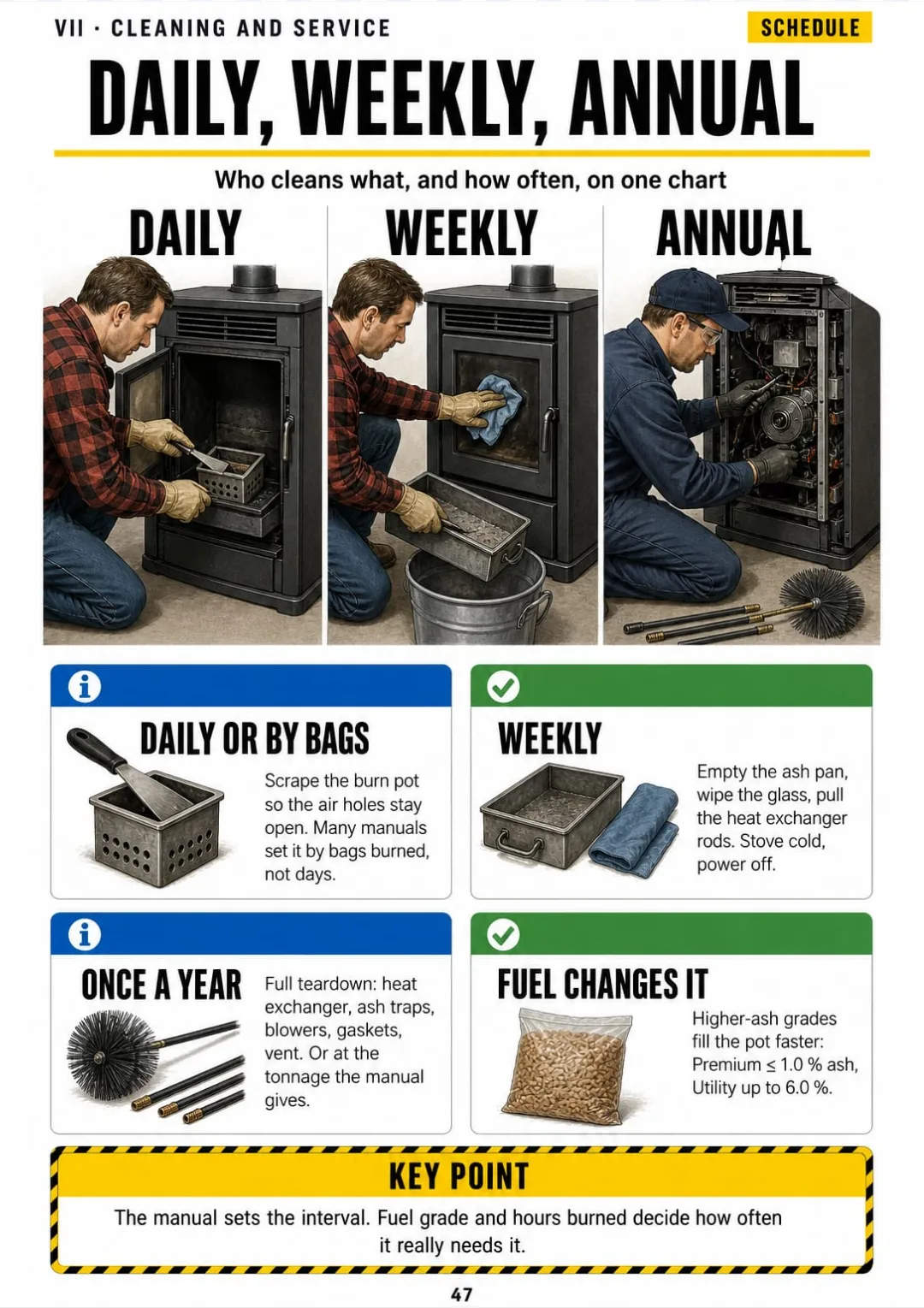
Burn pot daily, ash pan and glass weekly, full teardown and vent once a year
Fuel → feed → air → ignition → sensors → venting. The board comes last.

Swipe to see more →

These are real pages from the book. The table of contents is the full one: 9 parts and 60 topics.

The Problem Isn't You. It's How It Was Explained to You.

You're at a customer's stove. The flame is tall, orange and lazy, and there's soot on the glass. The homeowner is standing behind you, waiting for an answer.

You read about combustion air in the manual. But it was three paragraphs on air-to-fuel ratio for one brand, and at the burn pot, those paragraphs don't help.

Too much air blows it out, too little makes it lazy and sooty: the good flame is short and bright.

In the book, the burn pot is one page. The fire triangle sits on top of the pot, with three flames drawn side by side: too much air blows it out, too little makes it lazy and sooty, and the good flame is short and bright.

Pellet grades, the startup timeline, the vacuum switch, PL vent and the annual teardown each get their own page too.

You see which flame you've got and you know where to look next. You know where to start before you even open the manual.

COMPARE FOR YOURSELF

The Same Topic, Two Ways to Study It

THIS
  • The manual: line after line
  • Pellet grades explained only in words
  • You walk into the exam still unsure
Densified biomass fuel intended for residential pellet appliances is classified into grades according to a series of quality parameters, including bulk density, diameter, durability, fines content, inorganic ash content, length, moisture and chloride content, among others. The ash parameter, expressed as a percentage by weight on a dry basis, is of particular significance, since higher ash fractions contribute to accelerated accumulation in the burn pot and on heat exchange surfaces, which, depending on appliance design and operating conditions, may necessitate more frequent maintenance intervals.
FOR THIS
  • Pellet grades in one drawing
  • The ash limits in a box
  • You see it and you get it
Ash by grade: Premium ≤ 1.0 %, Standard ≤ 2.0 %, Utility ≤ 6.0 %.
CONTENTS

Take a Look at the 9 Parts and 60 Topics

The stove as a system, fuel and feed, air and combustion, ignition and sensors, venting, installation, cleaning, troubleshooting by symptom and exam review: 64 pages, all illustrated.

IThe Stove as a System · pp. 5-10
  1. One Stove, Six Systems
  2. Pellet vs. Wood vs. Gas
  3. Inside the Cutaway
  4. Two Air Paths That Never Mix
  5. Negative Pressure: Why It Matters
  6. Bottom-Feed, Top-Feed, Rear-Feed
IIFuel and Feed · pp. 11-17
  1. Pellet Grades at a Glance
  2. Moisture, Fines and Bad Bags
  3. Storing Pellets
  4. Hopper, Lid Switch and Drop Tube
  5. The Auger and Its Gearmotor
  6. Feed Rate Is a Timing Cycle
  7. Testing the Auger Circuit
IIIAir and Combustion · pp. 18-23
  1. The Fire Triangle in a Burn Pot
  2. Reading the Flame
  3. The Combustion Blower
  4. The Convection Blower
  5. Burn Pot Holes and Air Flow
  6. Outside Air Intake
IVIgnition, Sensors and Board · pp. 24-31
  1. The Startup Timeline
  2. The Shutdown Timeline
  3. Igniters: Cartridge and Hot Air
  4. Vacuum Switch
  5. Proof of Fire / Low Limit
  6. High Limit
  7. The Control Board and Error Codes
  8. Thermostat and Operating Modes
VVenting · pp. 32-39
  1. Type PL Vent
  2. 3 in or 4 in: Equivalent Vent Length
  3. Vertical Rise Before Horizontal
  4. Termination on the House Wall
  5. More Termination Hazards
  6. Venting into a Masonry Chimney
  7. Wall and Ceiling Pass-Throughs
  8. Inserts and Hearth Mounts
VIInstallation · pp. 40-46
  1. Read the Listing Label
  2. Clearances to Combustibles
  3. Floor Protection
  4. Mobile and Manufactured Homes
  5. Power, Outlet and Backup
  6. CO and Smoke Alarms
  7. First Fire and Commissioning
VIICleaning and Annual Service · pp. 47-52
  1. Daily, Weekly, Annual
  2. Heat Exchanger and Ash Traps
  3. Cleaning the Vent
  4. Gaskets: The Dollar-Bill Test
  5. Blowers, Hoses and Sensors
  6. Safe Ash Handling
VIIIFault-Finding by Symptom · pp. 53-59
  1. The Same Order, Every Brand
  2. Won't Feed
  3. Won't Light
  4. Lazy, Dirty Flame
  5. Smoke Smell or Puffing
  6. Shuts Down After Running
  7. Using a Multimeter and a Manometer
IXReview and Exam Prep · pp. 60-64
  1. What the Pellet Specialist Exam Covers
  2. Numbers to Have at Hand
  3. Code vs. Listing vs. Manual
  4. Common Service Mistakes
  5. The Service Visit Checklist

One Page, One Topic, All Clear

Think of it this way:

A stove lights, runs twenty minutes and shuts down. The customer wants to know why, and you need to know where to start.

You open the page "The Same Order, Every Brand" and see the six systems drawn as a chain: fuel → feed → air → ignition → sensors → venting. The board comes last.

Pellet vent: UL 641 listing, 570 °F rating, sealed double-wall joints.

Same with the startup timeline, the vacuum switch, PL vent, clearances to combustibles and the annual cleaning: each one on its own page.

Pellet Stove Service Illustrated is 9 parts and 60 topics, all drawn, and it ends with exam review, the numbers to have at hand and a service visit checklist.

What you see drawn, you don't have to memorize.

What's Inside Pellet Stove Service Illustrated:

Ipp. 5-10

The Stove as a System

The six systems of a pellet stove, how it differs from wood and gas, the labeled cutaway, the two air paths, negative pressure and the feed types.

IIpp. 11-17

Fuel and Feed

Pellet grades, moisture and fines, storage, the hopper and lid switch, the auger and gearmotor, feed rate as a timing cycle and testing the auger circuit.

IIIpp. 18-23

Air and Combustion

The fire triangle in the burn pot, reading the flame, the combustion and convection blowers, burn pot holes and outside air.

IVpp. 24-31

Ignition, Sensors and Board

The startup and shutdown timelines, igniters, the vacuum switch, proof of fire, high limit, the control board, error codes and operating modes.

Vpp. 32-39

Venting

Type PL vent, 3 in or 4 in and equivalent vent length, vertical rise, terminations and their hazards, masonry chimneys, pass-throughs and inserts.

VIpp. 40-46

Installation

The listing label, clearances, floor protection, mobile homes, power and backup, CO and smoke alarms, and the first fire.

VIIpp. 47-52

Cleaning and Annual Service

What to clean daily, weekly and yearly, the heat exchanger, the vent, the dollar-bill gasket test, blowers and sensors, and safe ash handling.

VIIIpp. 53-59

Fault-Finding by Symptom

One order for every brand, then each symptom as a flowchart: won't feed, won't light, lazy flame, smoke smell, shuts down, plus using a multimeter and a manometer.

IXpp. 60-64

Review and Exam Prep

What the pellet specialist exam covers, the numbers to have at hand, code vs. listing vs. manual, common mistakes and the service visit checklist.

At the end of the book: Exam review, the numbers to have at hand and a service visit checklist.
Plus: 2 Free Books

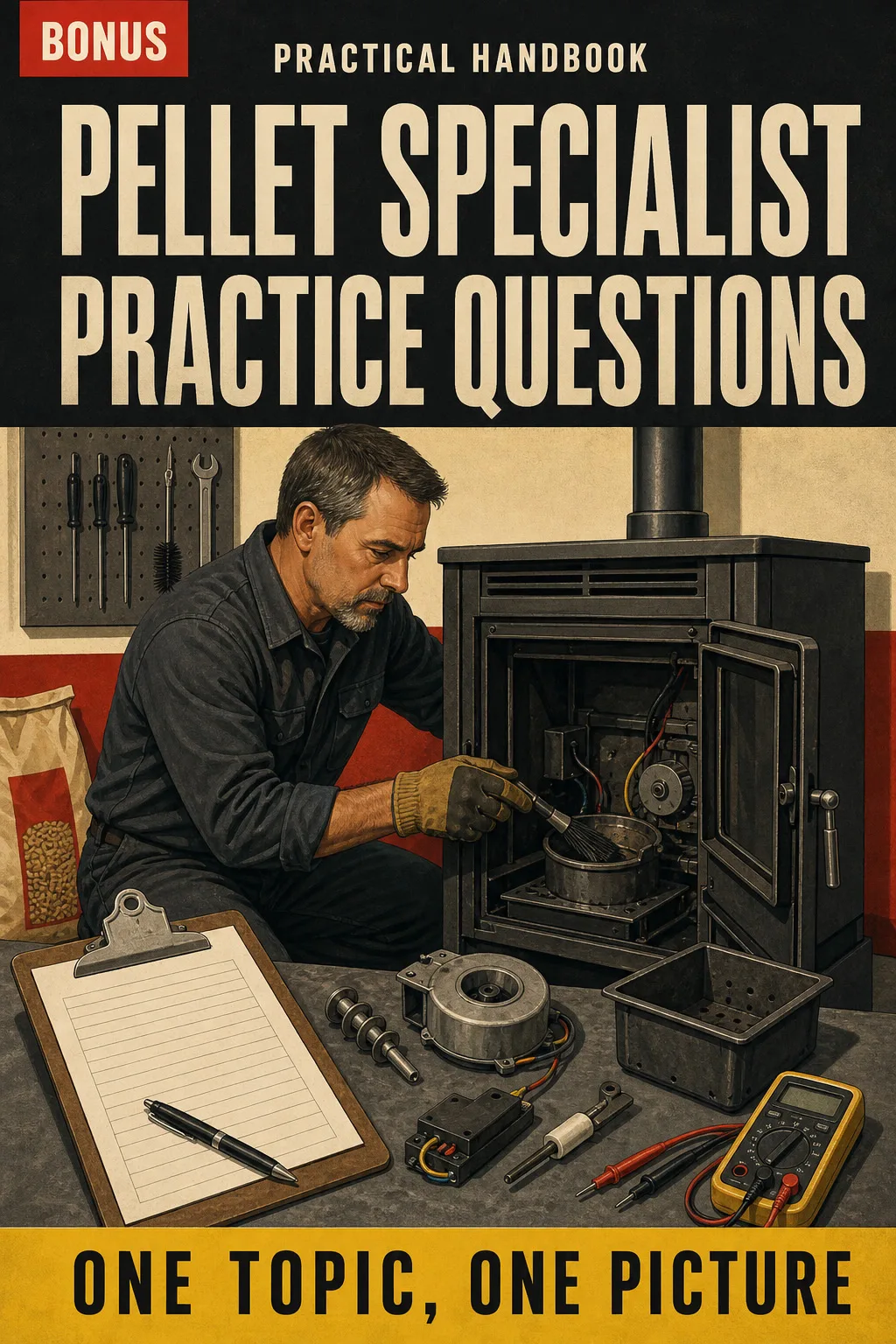
Pellet Specialist Practice Questions

BONUS 1: «Pellet Specialist Practice Questions»

Value on its own: US$ 17.90

Exam-style multiple-choice questions on every chapter, with the answer and a one-line why, so you find your weak spots before exam day.

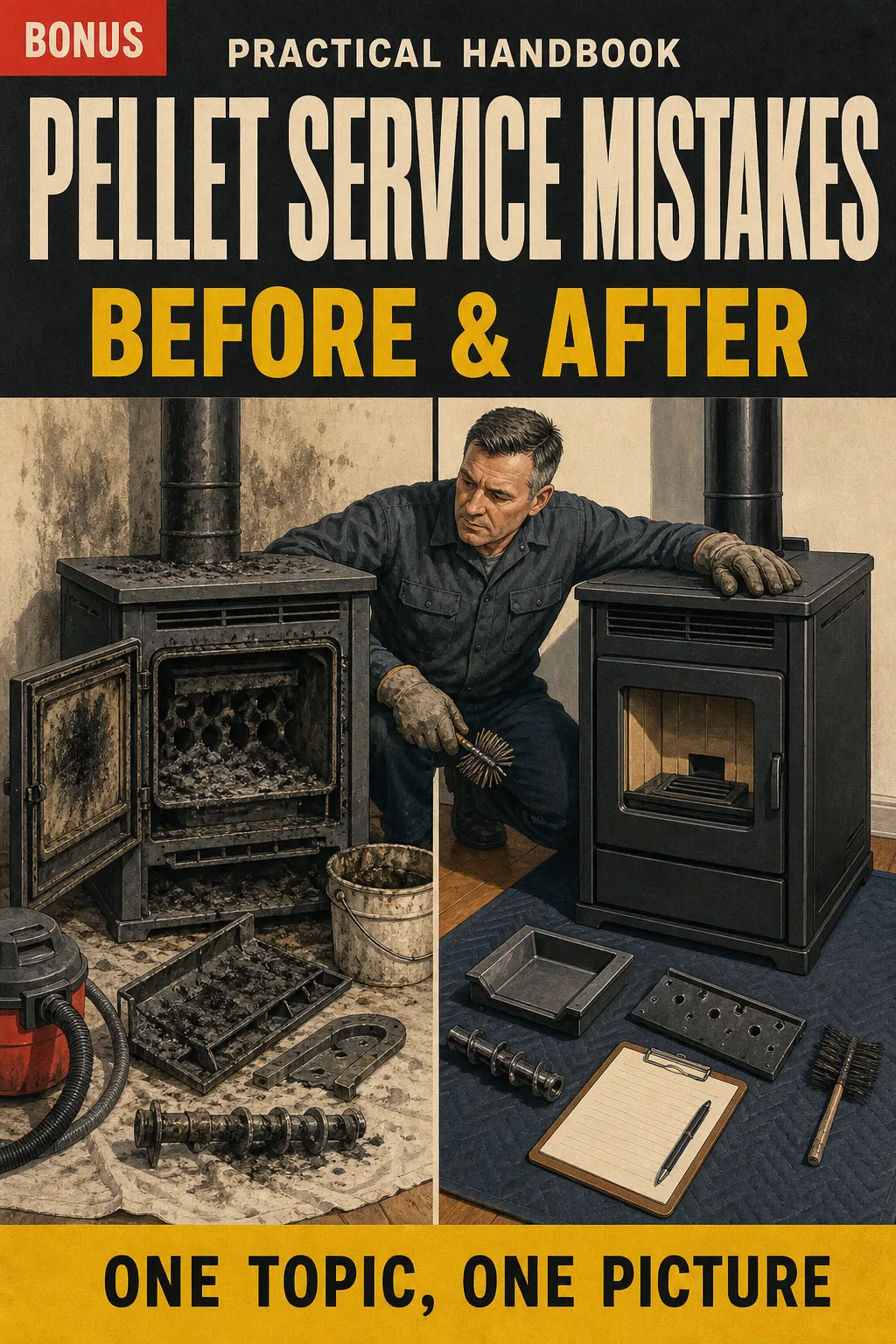
Pellet Service Mistakes: Before & After

BONUS 2: «Pellet Service Mistakes: Before & After»

Value on its own: US$ 14.90

The most common install and service mistakes drawn side by side with the right way, so you catch them before a callback does.

Pellet Stove Service Illustrated with 2 Free Books

  • Pellet Stove Service Illustrated: 64 illustrated pagesUS$ 63
  • BONUS 1: Pellet Specialist Practice QuestionsUS$ 17.90
  • BONUS 2: Pellet Service Mistakes: Before & AfterUS$ 14.90
  • High-resolution PDF to printIncluded
Total value US$ 95.80
YOUR PRICE:
US$ 27
You save US$ 68.80
YES, I WANT PELLET STOVE SERVICE ILLUSTRATED FOR US$ 27

📄 This is a digital PDF book sent to your email: nothing is printed or shipped.

Secure purchaseEncrypted payment30-day guarantee

PDF by email: We email you Pellet Stove Service Illustrated as a PDF, together with the two free books. It's a single payment: no installments, no extra charges.

Who This Book Is For

You're adding pellet stoves to your work

You're adding pellet stoves to your work

You know wood and gas. The book shows you what pellet stoves add: the auger, the sensors, the board and the timing, part by part.

The pellet specialist exam is coming

The pellet specialist exam is coming

Every exam topic sits on its own page, with the numbers in a box and a review part at the end to find your weak spots.

You already service pellet stoves

You already service pellet stoves

Print it and keep it in the truck: one diagnostic order for every brand, and a flowchart for each symptom.

Everything You Get Today

US$ 95.80US$ 27
YES, I WANT PELLET STOVE SERVICE ILLUSTRATED FOR US$ 27

📄 This is a digital PDF book sent to your email: nothing is printed or shipped.

30DAYS
GUARANTEE

30-Day Guarantee

Try Pellet Stove Service Illustrated for 30 days, bonus books included.

We refund everything if the file won't open, if the book isn't what you see here, if you were charged twice or if the email doesn't arrive. Just email us.

You pay once. No subscriptions.

Frequently Asked Questions

Is it for me if I've worked with wood and gas for years?

Yes. It doesn't teach you fire from scratch: it shows what pellet adds (feed, negative pressure, sensors, the board) and one diagnostic order that works on any brand. It isn't tied to one manufacturer, and it doesn't list every brand's error codes: it shows how to read them and which system each one points to.

Where does the content come from?

It's written for U.S. work and checked against NFPA 211, the International Residential Code, the UL 1482 and ASTM E1509 listings, UL 641 for PL vent, EPA wood heater standards, the Pellet Fuels Institute fuel grades and manufacturers' listed instructions. Your jurisdiction may adopt a different code edition, so confirm it with your local code official. Exam review follows the published topics of the pellet specialist exam.

Is this official material?

No. It's independent study material, and it doesn't give you a certificate or count as a course: certification comes only from passing the exam with the certifying body. It isn't affiliated with or endorsed by any certifying body, standards organization or manufacturer.

Does it replace a course or training?

No. It helps you study and review. It doesn't replace hands-on training, the manufacturer's listed installation instructions or your local code.

Are the practice questions the real exam questions?

No. They're written for this book, in exam style, to help you review. They aren't official questions from any exam.

When and how do I get it?

The book and the 2 bonus books arrive as PDFs by email, at the address you enter at checkout.

Do I have to pay every month?

No. It's a one-time payment.

Can I have it on paper?

Yes. It's a printable PDF: print the whole book or just the pages you want to keep in the truck.

How does the refund work?

You have 30 days. We refund everything if the file won't open, if the book isn't what you see on this page, if you were charged twice or if the email doesn't arrive: just email us.

Before You Close This Page

No more rereading without it sticking.

The burn pot flame: you see it drawn, and that's it.

You get to the exam or the job knowing where everything is.

Drawings make studying faster.

The book is right below.

One-time payment: US$ 27 · Guarantee: 30 days · PDF by email

YES, I WANT PELLET STOVE SERVICE ILLUSTRATED FOR US$ 27

📄 This is a digital PDF book sent to your email: nothing is printed or shipped.